Yes, provided you invert the logic that prevailed ten years ago. In 2026, a sound investment in Budapest rests on long-term value and on long-term or student rental, no longer on tourist letting. Prices have doubled, short-term rentals have become far more restricted, and taxation remains simple and legible for an individual. Here is what still works, with figures and field experience to back it.
What has changed since 2015
When we started assisting investors in Budapest, in 2015, central square-meter prices ranged from 1,500 to 3,000 euros, credit and tourism supported the market, and tourist rental faced almost no limits. Ten years later, the picture has changed on all three fronts. In the comparable properties and listings we track in early 2026, central properties most often sit between 3,000 and 3,800 euros per square meter, with wide variations by district and building condition. The Hungarian economy has been through several years of weak, uneven growth, and short-term rental has been banned in the 6th district since 1 January 2026, with a moratorium on new registrations across the whole city until the end of the year.
The practical conclusion fits in one sentence: the market no longer rewards mere presence, it rewards selection. An average property bought at full price can no longer be rescued by general price growth the way it could between 2015 and 2019.
Prices in early 2026, and where to look
The market favors sellers. On the quality central properties we follow, negotiation margins are often limited and the best properties sell quickly. Each district nevertheless follows its own logic.
| Zone | Dominant profile | Strength | Watch out for |
|---|---|---|---|
| V | Wealth preservation | Centrality, liquidity | High entry price |
| VI | Wealth preservation, long-term | Architecture, Andrássy | Short-term rental banned |
| VII | Tourism, long-term | Central demand | Co-ownerships, nightlife noise |
| VIII | Transformation | Upside potential | Street-by-street variation |
| IX | Students, young professionals | Universities, development | Micro-location |
| XIII | Long-term | More recent buildings | Less touristic |
One thing ten years in the field taught us: the building matters as much as the apartment. The state of the roof, the water risers and the common areas, and any condominium association arrears, weigh directly on value and on future charges. A beautiful apartment in an indebted building is a bad purchase.
Which rental strategy in 2026
Short-term rental only makes sense in one precise case: a property that already holds a valid permit, registered before the moratorium, in a district that does not ban it. Outside the districts that impose a local ban, some permits registered before the moratorium can keep operating; our Airbnb in Budapest guide covers the full picture. Their continuation after a sale or a change of operator must nevertheless be checked case by case, the regulatory direction is clear, and other districts are studying their own restrictions.
Student rental, our historical specialty, remains a solid segment. International demand is driven by the medicine, economics and engineering universities. On the well-located properties we managed, occupancy approached 100% outside the summer break, which must be built into the numbers. Long-term rental has become the default choice. On the properties and neighborhoods we follow, rents remain on an upward trend, with marked gaps by location and tenant profile. Above all, it is far less exposed to the restrictions aimed at tourist letting.
On yields, in our prudent models, a properly bought and properly run property most often sits between 4 and 5.5% gross. That range is our operational reading, not an official market average. Beyond it, ask what the seller or the intermediary has not counted.
Fees and taxation: what has not moved
For a standard apartment, count 4% transfer duty on the value retained by the administration, plus the lawyer's fees, with the lawyer playing the central role in a Hungarian transaction, generally around 1%. Taxation remains one of the market's great strengths. For an individual, rental income is taxed at 15%, with a choice between deducting substantiated actual expenses and a flat 10% allowance. Hungary has no uniform national property tax, though some municipalities can levy local taxes on buildings or land, to check by address. On the resale of a residential property, the 15% tax applies to the documented net gain, not the sale price, and the taxable share of that gain decreases in calendar-year steps, down to zero from the fifth year following the year of acquisition. Tax treaties, such as the France-Hungary convention for French residents, prevent double taxation; the rules of your country of residence apply on top. The full details are in our FAQ.
Renovation, where everything is decided
Across our fifty-four transactions and around sixty renovations, the line item investors underestimate most has never been the purchase price. It is the construction work. Skilled construction labor is scarce in Budapest, part of it works abroad, and we have seen companies abandon a project midway, sometimes all the way to insolvency, leaving debts and delays behind them.
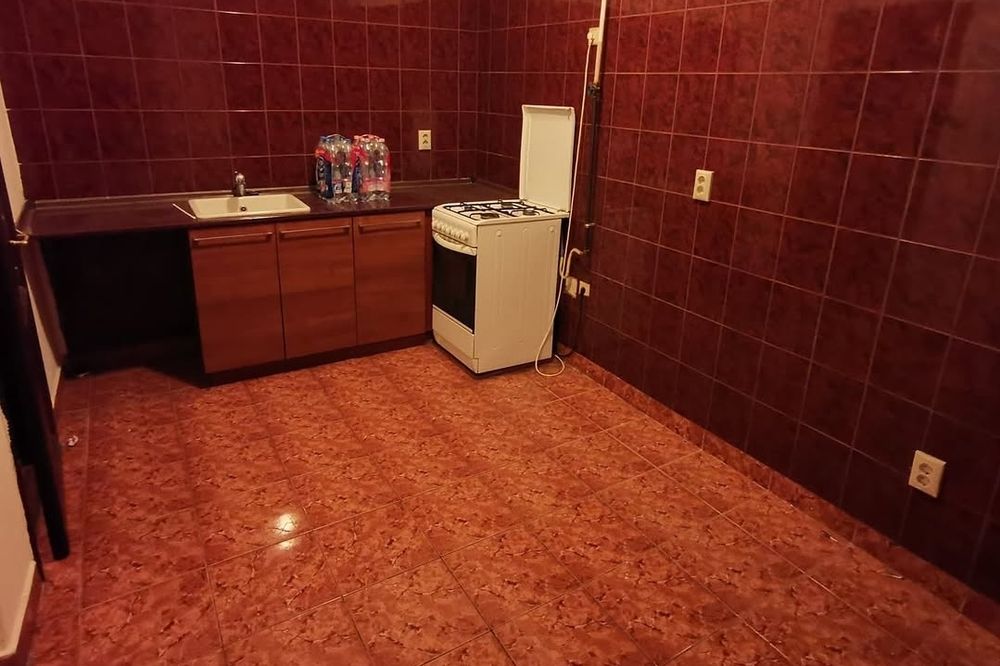
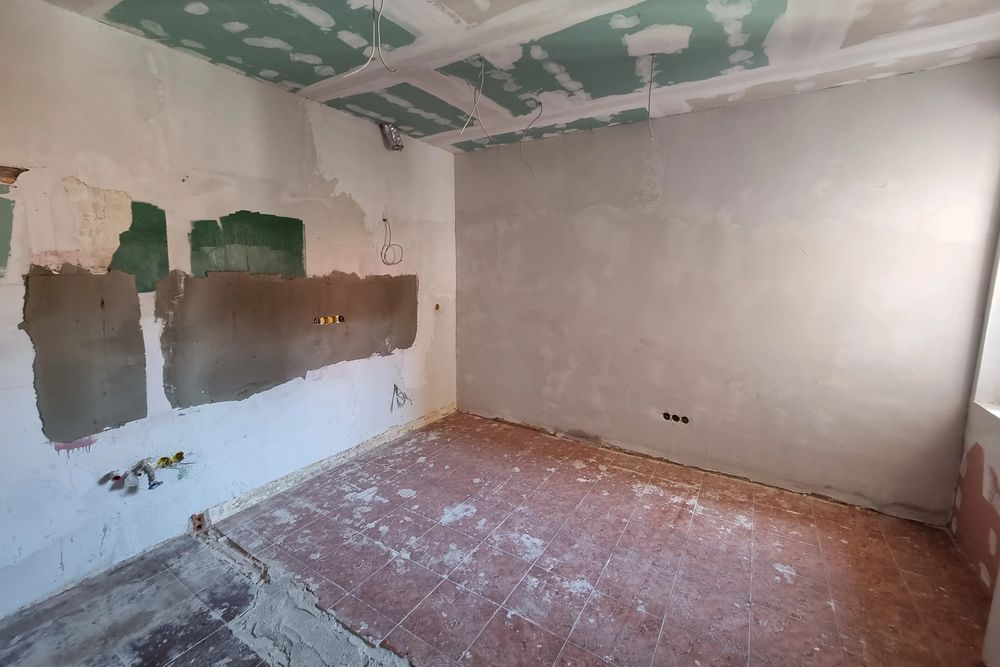
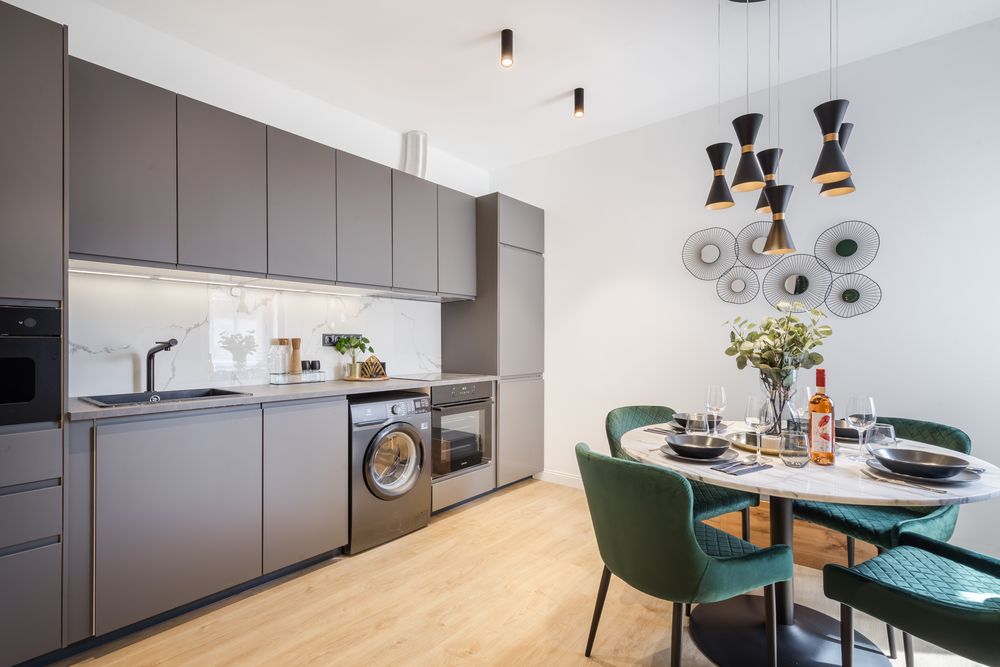
The apartment featured in the case study below, photographed before works, during construction, and after delivery.
The rules we applied systematically: never pay too far in advance, tie payments to actual progress, put late penalties in the contract, walk the site every week, and keep a 10 to 15% reserve of the works budget for surprises. And require quotes explicitly inclusive of VAT: Hungary's standard rate is 27%, and a net-of-tax quote changes the whole budget. In a condominium building, any intervention on a load-bearing wall or a water riser requires permissions that take time, to anticipate before signing, not after.
The full construction budget, VAT treatment, staged payments, realistic timelines and air-conditioning rules are covered in our guide to renovating an apartment in Budapest.
Acquisition around 95,000 euros, for an apartment in very poor condition: electricity to redo entirely, everything to rebuild, and condominium association arrears identified before signing, factored into the price negotiation. Works budget, around 110,000 euros.
The project ran into the market's classic problem: a contractor too slow, replaced midway. Money was lost with the first company, and the legal proceedings brought nothing back. The real protection did not come from the contract, it came from the decision to stop early, rather than pushing on with the same team and hoping the site would recover.
The layout was entirely redrawn: five bedrooms, two full bathrooms, a separate WC and a large living room open to the kitchen. In student rental, each room let for 350 euros a month, 1,750 euros for the apartment from September to May. In summer, run as short-term rental, the property generated between 3,000 and 4,000 euros gross per month. On that basis, gross annual income sat between 24,750 and 27,750 euros. On the cost side, purchase, acquisition fees, works and furnishing included, the total lands between roughly 222,000 euros if every amount was VAT-inclusive and roughly 255,000 euros if the main items were net of tax; the archived invoices included a mix of VAT-inclusive and net amounts. Gross yield therefore came out around 10 to 12.5%, before charges, management, taxation and any vacancy. We retain about 11% as a prudent order of magnitude, not as a promise reproducible in 2026. Five years on, it is impossible to reconstruct precisely the net-of-tax share of each quote: that is exactly why we now recommend requiring quotes explicitly inclusive of VAT.
A similar property acquired in 2026 without an existing short-term permit would be modeled differently: student or long-term rental year-round, given the moratorium in force and the tightening rules, and above all entry prices far higher than in 2020. That gap between the two markets is precisely what explains the prudent 4 to 5.5% range given above.
After some forty operations, experience does not eliminate contractor problems. It teaches you to stop them early and to limit the damage.
Net yield, calculated honestly
The only valid basis is total invested cost: purchase price, acquisition fees, works, furnishing, reserve. Not the listed price. Once vacancy, management, common building charges, routine maintenance, the 15% tax and the euro-forint exchange risk are deducted, a gross yield advertised at 7% often ends up between 4 and 4.5% net before taxes in your country of residence. That figure remains a respectable return for a European capital city, provided you looked at it squarely before buying rather than after. Our investor analysis of the forint after the 2026 election shows how to stress-test that risk across the purchase price, renovation budget and rental income.
Seven mistakes seen in the field
- Buying for tourist rental in the 6th district, still pitched by some agents despite the ban.
- Calculating yield on the purchase price instead of total invested cost.
- Signing without checking the condominium association's arrears and the latest general-meeting minutes.
- Paying for a renovation largely in advance, without milestones tied to progress.
- Forgetting summer vacancy in a student-rental calculation.
- Ignoring the euro-forint exchange risk over a multi-year horizon.
- Buying remotely without an independent second visit of the apartment and the building.
The checklist before signing
- Land registry checked, owner and registered charges verified.
- Condominium association arrears and latest general-meeting minutes.
- Condition of the roof, water risers and common areas.
- If short-term rental is planned: a real, valid permit whose continuation after the operation has been confirmed by a local lawyer, district checked.
- Works budget challenged line by line, with a reserve.
- An independent lawyer, chosen by you, not by the seller.
- Payment route, tax-number timing, and the potential need for a Hungarian bank account clarified before signing.
- Yield calculated on total invested cost.
- Exit strategy set from the purchase: resale or holding beyond five years.
The purchase process itself, steps, lawyer, foglaló and checks, is detailed in our guide to buying an apartment in Budapest.
Frequently asked questions
Is short-term rental still possible in Budapest?
In the 6th district, it has been banned since 1 January 2026. Elsewhere, a moratorium freezes new registrations until the end of 2026. Some earlier permits can still be operated; their validity after a sale or a change of operator is checked case by case with a local lawyer.
Can an EU citizen buy without residing in Hungary?
Yes, for a standard residential property. An EU citizen buys without the prior authorization required of some non-EU buyers, and agricultural land follows separate rules. Title and charge checks remain the local lawyer's responsibility.
What budget should you plan for a first investment?
In the transactions we observe in early 2026, a serious central acquisition with renovation and furnishing often leads to a total budget of 150,000 to 200,000 euros. It is not a universal price: the district, the building, the property's condition and the finish level make it vary widely. Below that, compromises on location or building condition become significant.
Should you invest in Hungary or specifically in Budapest?
For a foreign investor, Budapest generally concentrates market depth, international rental demand, universities, transport and resale liquidity. Other Hungarian cities can offer lower entry prices, but they must be analyzed with a different logic.
Very few diagnostics are offered before signing, with cases selected one by one. A request or focused question may receive no reply, and no response is guaranteed. If accepted, the diagnostic is a paid, one-off review.
Review conditions and pre-qualify the caseSince 2022, François has applied this discipline in Bali through DALLEAU. The full story of that move is told in our story.
6th district ban: Reuters, September 2024. Moratorium and regulatory tightening: DLA Piper, December 2025. Rental income taxation, 15% with actual expenses or a 10% allowance: NAV, Hungary's tax authority, official booklet no. 10. Transfer duty: NAV, official booklet no. 19 on property transfer duties. Capital gains on resale, taxable share decreasing by calendar year: NAV, official booklet no. 9. France-Hungary tax treaty, for French residents: official text, impots.gouv.fr. Price and yield ranges reflect our market observations and the public data available in early 2026. This article provides general information based on our experience, not legal, tax or financial advice tailored to your situation.